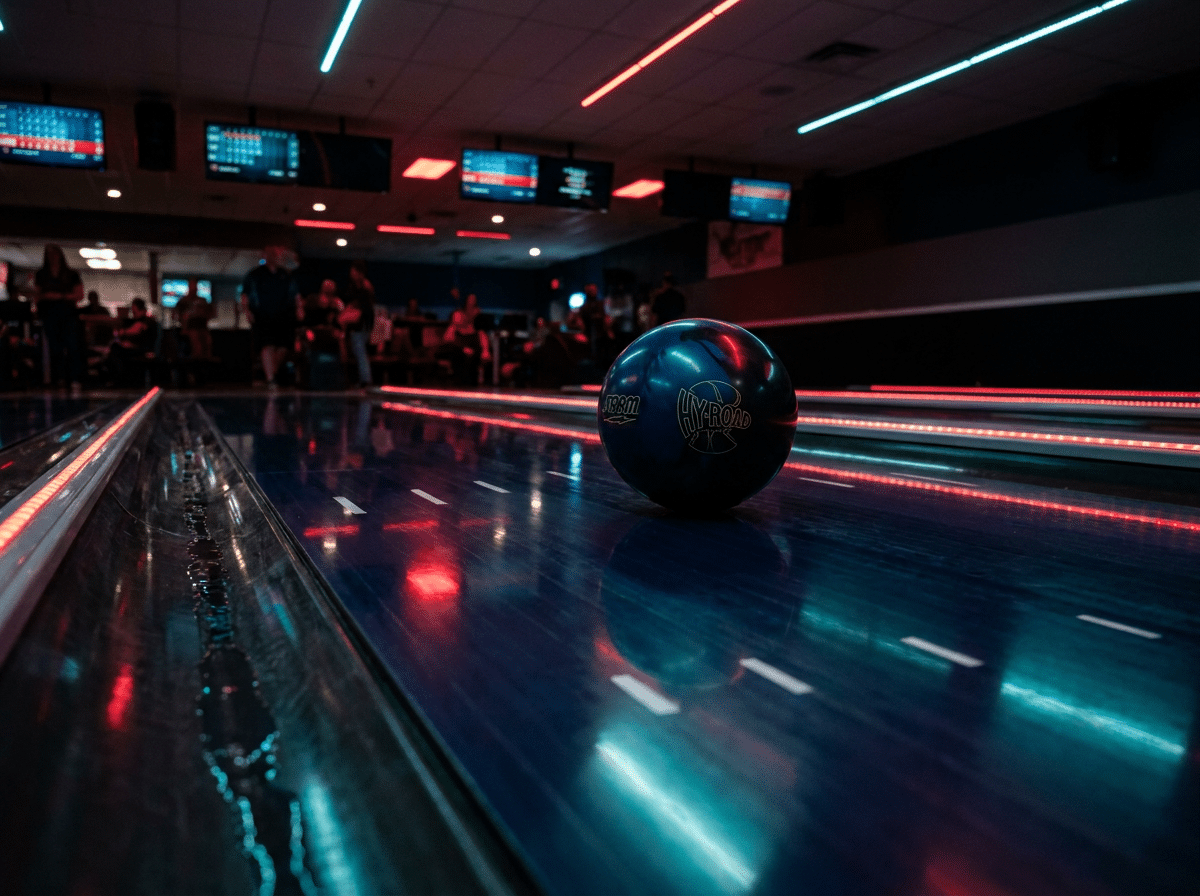
You’re two games into league night, throwing the same ball to the same spot — and suddenly it’s not doing what it did an hour ago. It’s hooking too early, skating past the breakpoint, or skidding through the pins. Nothing changed on your end.
Lane transition happened. Learning to read it and respond is one of the biggest leaps you can make as a competitive bowler.
What Lane Transition Is and Why It Happens
When the night starts, lanes are freshly oiled. That pattern acts as a highway for your ball, controlling where it slides, when it grips, and how hard it hooks at the back end.
The problem is that oil doesn’t stay put. Every ball that rolls down the lane carries oil with it, redistributing it toward the outside edges and pushing it further down the lane. The inside part of the lane where most bowlers play starts to dry out, while the outside edges can get slicker. This gradual shift is what bowlers call transition.
It’s not a malfunction — it’s just physics. But if you don’t recognize it and adjust, you’ll keep missing shots you were making an hour ago.
Signs That Transition Is Occurring
Your ball is your best data source. Here are the clearest signals:
Reading the Lane Before You Step on the Approach
Smart bowlers gather intel from everyone on the pair — not just their own shots.
Watch other bowlers. Pay attention to where their ball makes its move and where it hits the pins. If your pair partner started inside and is now moving right, the lane is telling you something.
Look at the oil line. After a ball passes through, you can often see a subtle sheen where the oil ends and the dry begins. Watch that line as the session progresses.
Study the track area. The track is the worn path on older lanes that shows where most balls travel. Heavy traffic there means faster oil depletion — and faster transition.
Adjustments You Can Make
Once you recognize transition, you have three tools to work with.
Move your feet. If the middle of the lane is drying out, moving a board or two toward the oil (left for right-handers) lets you play a fresher part of the lane. Start small — one or two boards before you go bigger.
Move your target. Sometimes a small adjustment at the arrows is all it takes, especially if the ball is crossing over. Moving your target in the same direction as your feet helps re-establish your angle without overhauling your whole game.
When to Move vs. When to Switch Balls
Moving your feet and target should always be your first response. Most transition adjustments are solved with a one-to-three board move before you ever touch your bag.
Switch balls when no foot adjustment gives you the right shape. If the lane has gone severely dry and your high-performance reactive ball is uncontrollable, a weaker or polished ball can restore control. If carrydown has pushed oil further down the lane and your ball is skidding through the pins, a more aggressive cover will help it hook when it needs to.
The question: Is my ball missing because of where I’m playing, or what I’m playing? If two or three foot adjustments haven’t fixed it, the answer is usually the ball.
Your Equipment Has to Be Ready Too
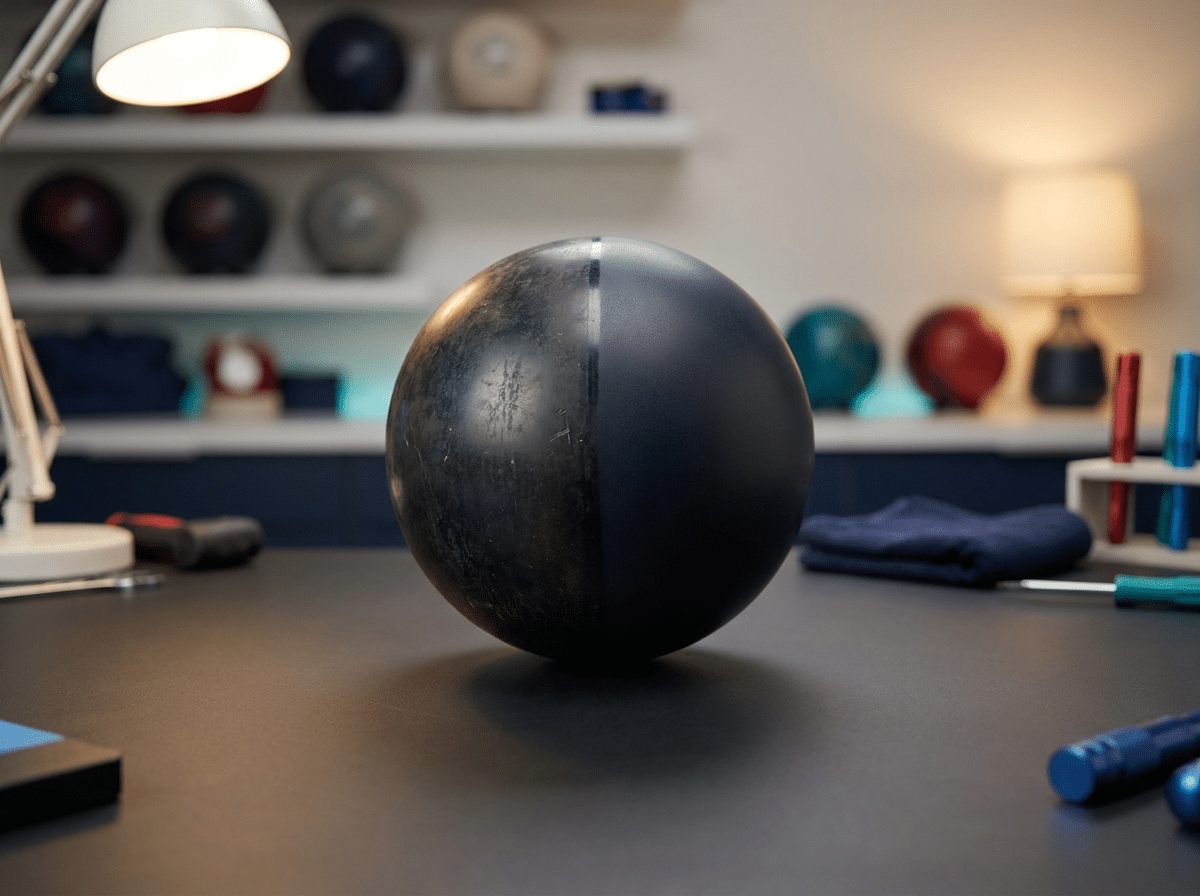
All of this only works if your equipment can actually respond the way you need it to. A ball with a glazed-over surface won’t react properly in wet-dry conditions no matter how perfectly you move your feet. And a ball that was drilled for someone else’s hand won’t give you the control you need when you’re chasing transition.
At Bowlers Depot in Largo, we resurface and polish balls to match the conditions you actually bowl on, and we custom-fit every drilling to your hand, style, and goals. If your ball has stopped reacting the way it used to, or you’re not sure your current setup is giving you the best shot at adjusting to transition, come in and talk to us. We’ll take a look.
Stop by at 11100 66th Street N, Suite 32, or call us at 727.773.9595. Lane transition is unavoidable — being unprepared for it is not.