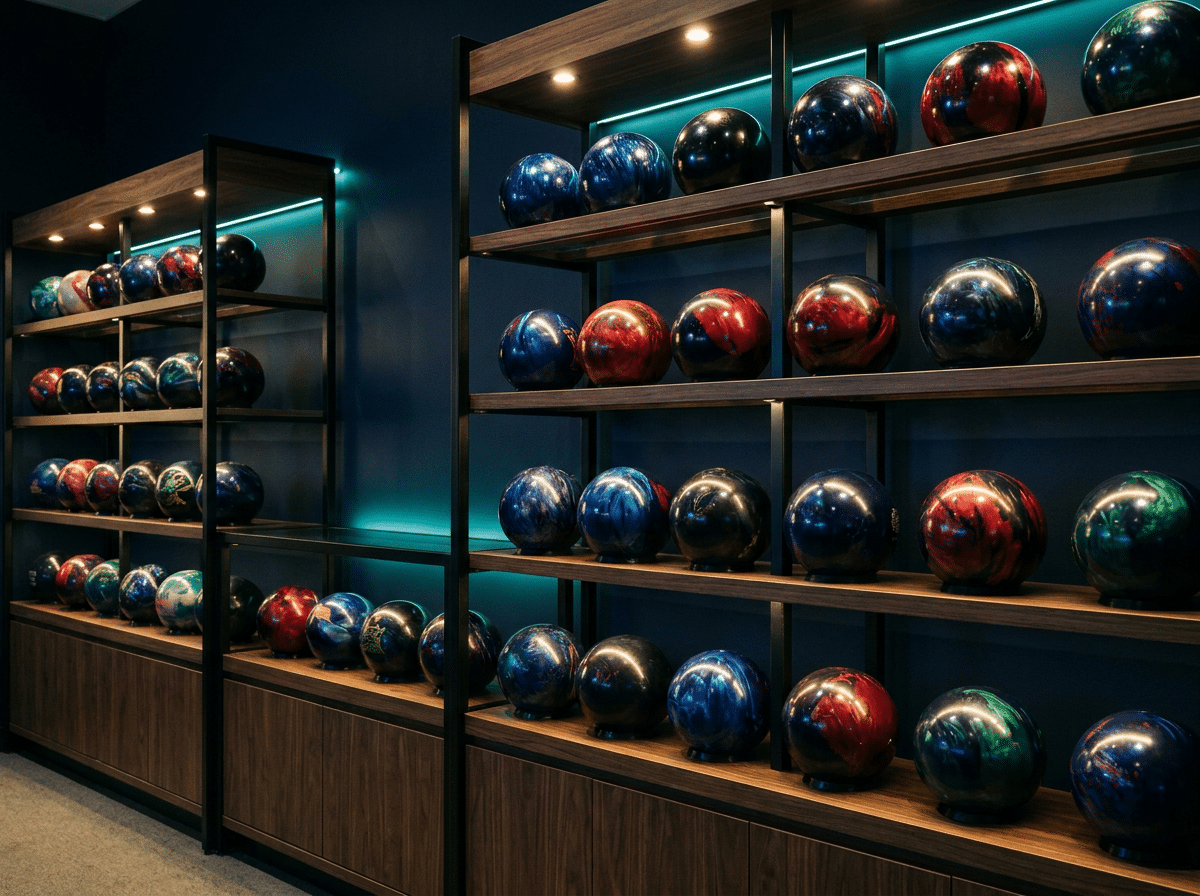
There’s a familiar feeling every bowler knows: a new ball drops, the hype kicks in, and before you can even get to the pro shop, you’re already wondering — will that thing actually work for my game?
The good news? You don’t have to guess. Between manufacturer spec sheets, video reviews, pro bowler feedback, and a little knowledge of your own bag, you can get a pretty clear read on how a new ball is going to behave before it’s even available to buy. Here’s how to do it.
1. Start With the Spec Sheet — It Tells You More Than You Think
Every bowling ball manufacturer publishes technical specs for each release. If you’ve ever glossed over them because they looked like alphabet soup, it’s worth slowing down — because three numbers do most of the heavy lifting.
Once you understand these three, a spec sheet stops being technical noise and starts telling you a real story about where and how a ball is meant to perform.
2. Watch Ball Reaction Videos From Trusted Sources
YouTube is one of the most underused resources in bowling. Before a ball hits dealer shelves, manufacturers, certified coaches, and experienced reviewers are already throwing it on camera.
Look for videos from:
When you’re watching, pay attention to where on the lane the ball makes its move, how sharp or gradual the hook is, and whether reviewers mention it being “clean through the front” or “earlier than expected.” Those observations translate directly to how it’ll handle your local house shot or sport pattern.
3. Understand Coverstock Technology — Solid, Pearl, or Hybrid
The coverstock is the outer shell of the ball, and it’s the first thing that touches the lane. It has a massive influence on how the ball reacts — sometimes even more than the core.
Knowing which coverstock a new ball uses tells you a lot before you even look at the core specs.
4. Follow Pro Bowler Feedback and Tournament Results
When new balls debut on the PBA or regional tour circuit, watch how they perform. Pros don’t bowl with equipment for the cameras — they bowl with what works. If you’re seeing a specific new ball showing up multiple times in the same tournament, that’s a signal.
Also pay attention to which pros are using it. A high-rev stroker throwing a ball one way tells a different story than a tweener or cranker throwing the same ball. When a pro mentions they chose that ball because it “gave them an extra 2 boards of room at the breakpoint” or “smoothed out their entry angle,” that’s real, useful information you can map back to your own game.
Social media helps here too — many pros and coaches share equipment breakdowns on Instagram and TikTok in plain language.
5. Know the Core Shape: Symmetrical vs. Asymmetrical
Inside every ball is a core that drives how it rolls through the pins. Cores come in two main types, and they behave differently.
When a new ball is released, the manufacturer will tell you which type of core it uses. Combine that with the coverstock info from the section above, and you’ve got a pretty complete picture of what the ball is designed to do.
6. Use Your Current Bag as a Reference Point
This one might be the most practical tip on the list — and it works because you already know your equipment.
If you throw a ball that you love, you know exactly what it does. You know where it makes its move, how it handles different conditions, and what kind of carry you get. Every new ball you research can be mapped against that.
When a reviewer says “this ball is a step stronger than the [Ball X] in the oil” — and you own Ball X — that comparison now means something specific to you. You can use what you know to build out your bag strategically, filling gaps rather than just chasing hype.
Think of your current arsenal as your measuring stick.
7. Ask Your Local Pro Shop — Seriously
Everything above is valuable research. But at the end of the day, there’s no substitute for talking to someone who has drilled thousands of balls and watched thousands of bowlers throw them.
At Bowlers Depot, that’s exactly what we’re here for. We’ve been in and around the bowling industry for over 40 years, and we’re authorized dealers for Storm, Brunswick, Motiv, Hammer, Ebonite, Radical, 900 Global, Track, Roto Grip, Columbia 300, DV8, and Swag. We know what’s coming, we follow the same reviews and tour results you do, and we genuinely love talking through the nuances of new releases with our customers.
More importantly, we know you. Your grip, your speed, your rev rate, your tendencies — and we can take all the spec sheet data and translate it into a real recommendation for your game. That’s something no YouTube video can fully replace.
When you come in, bring your questions. Tell us what you’ve been researching. We’ll help you figure out whether that new ball is a perfect fit or whether something else in the current lineup makes more sense for where you are right now.
Ready to Talk Equipment?
Stop in and see us at Bowlers Depot in Largo, Florida. We drill while you wait, we keep current on the latest releases, and we’ll give you an honest read on what’s going to work for your game — not just what’s getting the most buzz.
11100 66th Street N, Suite 32, Largo, FL 33773Call or text: 727.773.9595Book online: BowlersdepotLargo.com
Bowlers helping bowlers — that’s what we do.